Group recently saw Somali president
By Tanner Kent
Free Press Staff Writer
Hope is recognizable in any language.
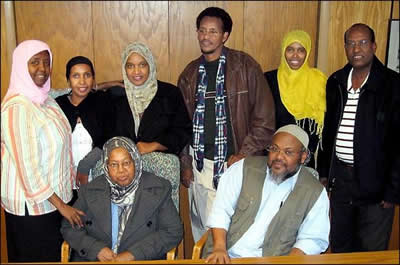 None / Tanner Kent |
While speaking of the reaction of Somali elders upon seeing the president of their native country on American soil, Mohamud Ahmed uses his finger to draw a line down his cheek.
Tears.
Unity.
And as these eight individuals — some of whom are recent immigrants who fled their war-torn homeland, while others, such as Faduma Yabero, have been residents for more than two decades — discuss the significance of the president’s trip, it is clear the visit meant more than diplomacy.
“I love my country that is so broken now,” Yabero said. “But this is the hope — he is our hope. That’s all I can say.”
The Twin Cities are home to the largest concentration of Somali immigrants in the United States. Census numbers put the population at about 35,000, but estimates push the number past 100,000.
During President Ahmed’s visit to Minnesota, the itinerary included meetings with state officials and legislators as well as public engagements. His talking points focused on continued support for the current Somali government at home and abroad.
Lul Ahmed, who works for Blue Earth County and translated for this story, was among a select group given a chance to meet privately with the president. She said she told the president that Somali people like herself have attained professional degrees and experience, own homes and are ready to begin rebuilding their native country.
But Lul Ahmed also said that the Somali people need to feel safe, and that kind of political and social stability will not come alone.
“We have to hold our hands together,” she said. “When I came to this country, I was Somalian. Now, I am a Somalian-American. The world needs to emerge together.”
Admittedly, there is a long way to go.
Decades of political infighting, revolution and bloodshed have widened some tribal divisions and left deep social schisms. This past weekend, news broke that escalating violence in the capital of Mogadishu left nearly two dozen civilians dead as insurgent forces attacked the presidency and the African Union peacekeepers who have pledged their support.
Source: Mankato Free Press, Oct 30, 2009