by Yusuf Mohamud
Tuesday, July 22, 2008
Seattle, Washington (HOL) - A short documentary about health issues in the war-torn African country of Somalia debuted in the City of Seattle on Saturday, July 19, 2008.
Entitled ‘The Forgotten Struggle,’ the documentary highlights some of the main health challenges and concerns afflicting Somalia’s people, especially the women and children.
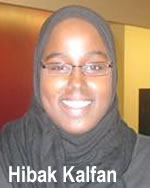 Hibak Kalfan, who co-produced the documentary and is co-director of The African Future (TAF), spoke with a crowd of Somalis and non-Somalis at Freedom Church, located at the corner of 35th and SW Roxbury Street in West Seattle.
Last year, Ms. Kalfan and her partner Abdifatah Ahmed traveled to parts of Somalia and visited seven towns, where they met with local health professionals and some of the patients.
The documentary shows Somali patients suffering from TB, malaria and diarrhea, but who lack proper treatment because there are no hospitals in their hometowns.
Some of the hospitalized female patients suffered from recto-vaginal fistula, a condition that arises from complications during pregnancy.
One of the female patients told the documentary’s producers that she has had “five stillbirths” in recent years.
Living standards and health conditions at one of the numerous Internally Displaced Peoples’ camps across Somalia are sub-human, with garbage and toilets piling up to the limit and creating new health problems for residents. The IDPs, who live in homes made of cardboard, are charged by square foot to live in the camps, according to 'The Forgotten Struggle' documentary.
While efforts are being taken to alleviate some of the problems, the sad reality remains that more Somalis are in need of assistance – food, water, shelter, medicines – than donors and volunteers can handle.
Youngsters like Ms. Hibak, who quit her job as a banker, offer a glimpse of hope for a country long forgotten by the international community.
She says that the medical field is in short supply of health staff, equipment and training. Somali health professionals who spoke on camera said local hospitals were in special need of equipment such as the ultrasound and a laboratory.
To donate or volunteer for TAF, please visit: http://www.theafricanfuture.org.
Yusuf Mohamud, HOL Correspondent
E-mail: [email protected]
Seattle, Washington (USA)