
Tuesday December 30, 2025
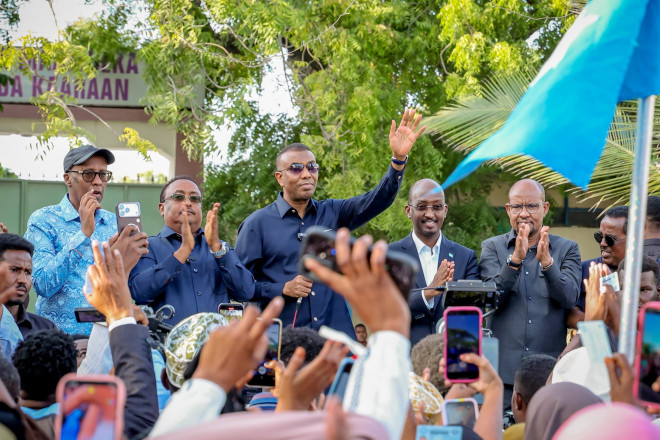
Israel’s announcement recognizing “Somaliland” is a strategic step aimed at expanding its influence in the Horn of Africa and the Red Sea, Somali Prime Minister Hamza Abdi Barre said, warning that the move could lead to the establishment of military bases, undermine African borders, and be linked to plans to displace Palestinians.
In an interview with AlQahera News, PM Barre thanked Egypt for its continued support for Somalia’s sovereignty and territorial integrity, as well as for the Palestinian cause.
“By establishing a presence in the Horn of Africa, especially in northern Somalia, Israel believes it can control the Red Sea and Bab Al-Mandab and build military bases there,” Barre said. He added that Israel was taking advantage of current international and regional conditions to advance this plan.
He rejected the recognition as legally invalid, stressing that Somalia is a sovereign state with internationally recognized borders and that no foreign power has the right to recognize a breakaway region.
Barre warned that the move was not symbolic, saying it served broader and “dangerous” goals that go beyond Somalia and threaten the wider region, particularly Arab and Islamic countries bordering the Red Sea.
He said the step could increase security risks by allowing Israel to expand its military presence in the area and could put Somali citizens in the north at risk. He also warned that it could encourage separatist movements across Africa, pointing to existing tensions rooted in borders drawn during the colonial era.
“Africa is already facing multiple crises, from Sudan to Somalia to Ethiopia and other areas,” he said. “Recognizing breakaway entities would have serious consequences for the entire region and for Africa as a whole.”
Barre said Somalia would raise the issue at the UN Security Council and call on it to uphold international law and describe the move as “unacceptable legally and morally.”
He said Somalia had received wide support from Arab, Islamic, and African countries and organizations, citing statements condemning the move from the Arab League, Egypt, Saudi Arabia, Turkey, Gulf states, the African Union, IGAD, the European Union, and regional East African bodies.
Barre said Somalia relied on this backing and described Israel’s step as a political failure in light of broad international rejection.
On the US position, Barre said Somalia maintains strong relations with Washington and that US officials had repeatedly assured Mogadishu of their support for Somalia’s unity and sovereignty. He said Somalia expects the United States to restate and maintain that position.
Barre also addressed claims that the Israeli move could be linked to plans to relocate Palestinians, stressing that Somalia rejects any forced displacement.
“No one has the right to forcibly displace Palestinians from their land,” he said, adding that while any Arab could choose to live in Somalia freely, transferring people against their will would be unacceptable.
Asked about reports that the arrangement had been in progress for some time, including claims that the head of the self-declared Somaliland administration secretly visited Israel, met the Mossad chief, and that Israeli media discussed security infrastructure plans, Barre said the breakaway leadership had maintained secret ties with Israel.
He named Abdirahman Irro as the leader of the Somaliland administration and accused him and his close associates of hiding agreements reached with Israel from the Somali public.
Barre said that even Somaliland’s own constitutional framework would not allow such a move. He described Netanyahu’s public video announcement as “embarrassing” and “shameful.”
Asked what Somaliland’s leadership gained in return, Barre said it amounted to little more than an Israeli declaration of recognition, while any obligations benefiting Israel were concealed from the Somali people.
Barre said Somalia would continue to use diplomatic and legal means to defend its unity and territorial integrity, expressing confidence that international law and diplomacy would be enough to pressure Israel to reverse what he called a dangerous decision.
Under international law, Somalia is recognized as a single sovereign state with borders established at independence in 1960. The African Union and the United Nations have repeatedly affirmed Somalia’s territorial integrity, warning that recognizing breakaway regions could destabilize Africa by reopening disputes over colonial-era borders.
Israel’s move marked a clear break from long-standing international consensus. No UN body, including the Security Council or General Assembly, has recognized Somaliland’s declaration of independence since it announced separation in 1991.
Israeli officials did not provide a detailed legal or diplomatic basis for the recognition, nor did they announce any treaties, embassy plans, or formal agreements. Nevertheless, the announcement triggered immediate political backlash across Africa and the Arab world, with critics describing it as unilateral, legally invalid, and destabilizing.