Prof. Dr. Yahya Amir Hagi Ibrahim
Tuesday December 30, 2025
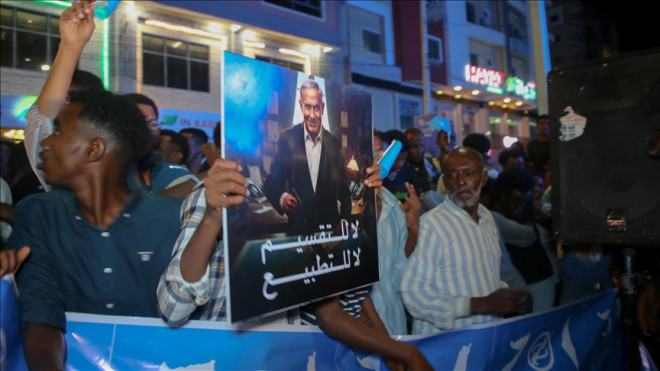
The strategic waters of the Red Sea and Gulf of Aden have once again become a flashpoint, with recent actions suggesting a dangerous escalation that threatens to unravel fragile stability and deliberately target international investments. Israel has shifted toward a posture that uses access to the Red Sea and Gulf of Aden as part of its broader regional strategy. At the same time, Türkiye is deepening its footprint in Somalia with long-term development projects spanning energy, infrastructure, and space technology. After Israel's decision to recognize Somalia's breakaway region, Somaliland, Somalian President Hassan Sheikh Mohamud pays a critical visit to Türkiye.
Houthis and Bab al-Mandab Strait
In response to Israel’s genocide on Gaza, Yemen’s Houthi rebels have launched drones, missiles, and maritime attacks targeting Israel and commercial shipping (toward Israel or flying the flag of Israel-supporting countries) in the Red Sea, Gulf of Aden and nearby waters. In response, Israel has conducted multiple airstrikes in Yemen.
Alarmingly, these actions appear to deliberately focus on areas where Türkiye has made significant investments in stability and capacity-building, signaling steps aimed not just at military objectives but at broader stabilization. This calculated targeting strikes at the heart of a pivotal and transformative partnership between Türkiye and Somalia. Over recent years, this alliance has moved far beyond diplomacy into tangible, nation-building projects designed to foster economic growth and regional security. To see them threatened is to see a blueprint for progress put at risk.
Over the past decade, Türkiye has built a deep, multi-layered partnership with Somalia, positioning itself as a key security and economic partner. Ankara’s long-term involvement began in earnest with high-level visits in 2011 and expanded through defense, economic, and development agreements.
Central to this is hydrocarbon exploration: under agreements granting rights across some 15,000 square kilometers of Somali offshore blocks, the Turkish Petroleum Corporation (TPAO) has conducted seismic surveys and plans to begin oil drilling by 2026, potentially harnessing significant reserves.
Beyond energy, Türkiye desires to include cutting-edge technological infrastructure. Ankara is planning a space launch facility in Somalia, leveraging the country’s equatorial advantage for satellite launches and potentially missile testing. The project (part of broader cooperation agreements signed in 2024) is expected to strengthen Türkiye's aerospace capabilities and deepen strategic ties.
Turkish capacity-building
Türkiye's footprint also extends to security and capacity-building. The Turkish military operates Camp TURKSOM, its largest overseas base, which trains Somali forces and enhances naval and coastguard capabilities. Joint agreements signed in recent years include maritime security cooperation to patrol Somali waters for a decade, protecting both regional stability and economic activities. Additionally, Turkish infrastructure investments include modernization of airports, hospitals, fishery programs, and diplomatic compounds.
Türkiye's strategy is structural, aimed at building Somali capabilities and mutual economic stakes. Whether through oil, space technology, or infrastructure, Ankara’s footprint in the Horn of Africa is designed for sustained impact.
* Opinions expressed in this article are the authors' own and do not necessarily reflect HOL's editorial policy.