
Tuesday December 9, 2025
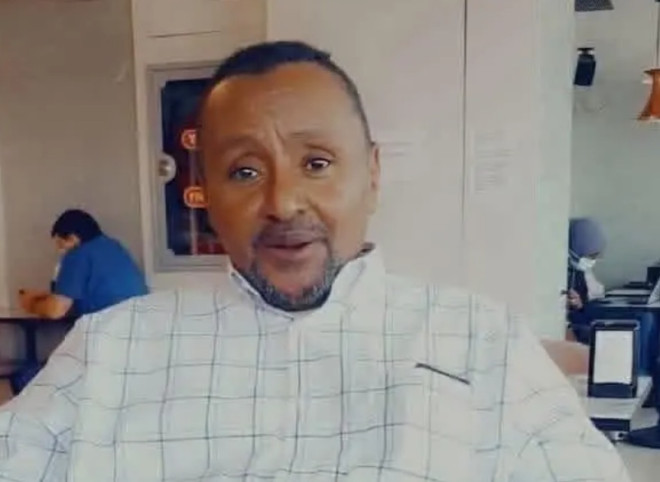
Fuaad Ahmed “Ilkacase,” a veteran Djiboutian singer and actor whose career spanned more than four decades, is seen in an undated photo posted on Facebook. The influential artist died this week in Djibouti City after a long illness, according to family and colleagues. SUPPLIED
DJIBOUTI CITY, Djibouti (HOL) — Fuaad Ahmed Gadhle, one of Djibouti’s most influential performers and a defining figure in the nation’s arts scene for more than four decades, died this week in Djibouti City after a prolonged illness. He was buried Monday night, with senior officials, artists and residents attending the funeral.
Ahmed, known widely by the stage name Ilkacase, had suffered declining health for years and recently experienced a stroke that further weakened him, according to Osman Elaye Iye, head of Djibouti’s artists’ association. Ciye said Ahmed remained committed to the arts community until his condition deteriorated.
Ahmed’s path to prominence started in the late 1960s. He worked at the Djibouti port, a job inherited from his father, before turning toward music. His early breakthrough came with “Arligaygoow,” a song written by composer Mohamud Essa Timajilic. In 1982, he made his stage debut in a production featuring Aamina Farah and Habiibo Balbalaaf which brought him national recognition.
Over the years, Ahmed collaborated with some of Djibouti’s leading female vocalists and was known as a singer, actor, and composer. Though he did not play instruments, colleagues said he possessed a strong melodic sense and a distinctive voice that shaped his artistic identity.
Artists remembered Ahmed not only for his craft but also for his generosity. Ciye said Ahmed often stepped in when colleagues faced hardship. “If an artist fell ill, he was the first to visit. If someone died, he was the one who dug the grave,” he said.
In his personal life, Ahmed was a father to 17 children and leaves behind an extended family of more than 40.
Patience Nyange, spokesperson for the Intergovernmental Authority on Development, issued a condolence message saying Ahmed’s “voice and legacy will continue to live in the hearts of many.”
With files from the BBC Somali Service