|
|
By ROSS MOROZ
Neither guns nor bombs nor motherhood can keep War Child’s Dr. Samantha Nutt from her daily rounds
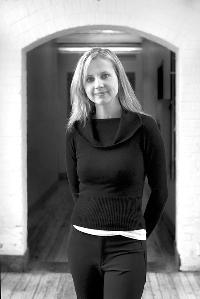 |
Dr. Samantha Nutt
"My experience in Somalia changed my life" |
Like many Canadian university students, Dr. Samantha Nutt felt an urge to go abroad after finishing her studies. But instead of spending a year backpacking through Europe or bumming around Australia like the rest us, the McMaster University medicine graduate decided to travel to Somalia as part of a London School of Hygiene-sponsored UNICEF team investigating maternal and child health after that county’s civil war.
“My experience in Somalia changed my life,” says Nutt, who founded the Canadian arm of international advocacy and aid organization War Child in 1999 after being so deeply affected by her time working with children in war zones. “War has profoundly affected my life, and I think that if I didn’t get up everyday and try to do something about it in some way that it would probably overcome me.”
Nutt, who is also a practicing physician and an assistant professor at the University of Toronto in the Department of Family and Community Medicine, has recently taken some time away from her responsibilities as a doctor, educator and advocate to give birth to her first child with husband and War Child president Dr. Eric Hoskins. Her Edmonton appearance as part of the University of Alberta’s Revolutionary Speakers series on Wednesday (November 30) will mark her return from maternity leave as she continues to juggle her work and family responsibilities with her role as executive director of the charity she founded.
Nutt spoke to Vue Weekly this week in advance of her Edmonton address; here are some of the highlights of the conversation.
Vue Weekly: Before you founded War Child Canada in 1999 you spent some time working overseas with other aid organizations. What made you decide you had to start your own organization, instead of just continuing to work within existing NGOs?
SN: In the five years between graduating from med school in 1994 and starting the charity, I worked overseas for the U.N. and different academic and non-governmental organizations in places like Somalia, Burundi, Iraq and Liberia. I decided that there was a lot of good work being done, but there were also a lot of opportunities being missed, and that I really wanted to be part of an organization that was working equally hard to do very meaningful programming on the ground in a genuine partnership with local organizations, but that also worked very hard to lobby on behalf of those who’ve been affected by war on an international level, and that’s what War Child is.
VW: How is War Child different from other aid organizations such as, say, World Vision or UNICEF or CARE?
SN: We’re different in a lot of ways. First of all, we have absolutely no religious affiliation whatsoever—we are completely non-denominational and we embrace all faiths. Additionally, many organizations fall into one of two categories: they’re either a programming organization or an advocacy organization. For example, Amnesty International and Human Rights Watch are both strictly advocacy organizations, while a group like CARE International focuses mainly on programming. We spend as much of our time working on domestic youth outreach and advocacy as we do on our international programming. We’re kind of dually mandated, so that makes us quite different than a lot of groups. And we also do all of our own implementation—a lot of organizations will say that they are operating in a particular place, and while that’s technically true, it’s rarely the Canadian arm of that organization that is being deployed. Like World Vision might say that they’re in Darfur, but it’s likely World Vision USA, not the Canadian arm. We won’t claim to be operating somewhere unless it’s actually our branch of War Child doing the work.
VW: War Child seems to have had great success in getting their message out there by partnering with Canadian musicians (the charity was launched with a benefit concert in Winnipeg that featured the Tragically Hip, and the group has raised funds by releasing charity albums and organizing other benefit concerts). Why is music such a big part of War Child’s domestic programming?
SN: Music has been a great tie-in for us, because it’s allowed us to reach out to people without spending any money. In the six years we’ve been operating we’ve never actually paid for advertising, and we’ve been able to do that because of the creative ways we’ve been able to work with artists to do concerts and make documentaries. That way all of our donations can be used for our overseas programming.
VW: One of War Child’s most successful promotional tools was the documentary Rocked, which featured Canadian pop-punk act Sum 41 visiting the Congo and narrowly escaping getting shelled after a conflict flared up. Can you tell us about that experience?
SN: We were evacuated from the Congo while we were filming the Sum 41 documentary because of a skirmish at the border. We were holed up inside our hotel, which was about two kilometres from the Rwandan boarder, which was where this all started to go down, and within 24 hours there were mortar rounds going off about 100 feet from us. It would certainly be fair to say that that was a very close call—when we were eventually evacuated by the U.N., the mortar rounds were hitting so close to the hotel that the walls and ceiling in our room were beginning to crumble. It’s funny, because I just recently gave birth for the first time, and I have to tell you, I’d choose giving birth over being evacuated from the Congo any day, especially with a band in tow and their panicky managers calling from Toronto to freak out.
VW: Sounds kind of scary. Is this sort of thing what typically happens to you on these trips?
SN: People ask, you know, “has your life been in jeopardy?” And, yes, it does happen, and it can be very frightening, but I think it also has to be taken in context. We’re working with and advocating on behalf of people who didn’t choose to be in these situations and who don’t have the ability to get the U.N. on the phone and ask to be evacuated when things take a turn for the worse. So to me it feels like an extraordinarily selfish thing to talk about the narrow escapes I’ve made when there are so many people who lose their lives because they don’t have the chance to escape that we have.
VW: Do you think you and your husband will be more cautious now that you’ve started a family?
SN: Believe it or not, we are always careful. We’re not cowboys: we put our own safety first and foremost wherever we go. Unlike, say, journalists, who are careening towards the frontlines at the first sign of danger, we go into an area only when conditions are secure enough for us to be able to effectively do our jobs. Having a child is obviously a much greater level of responsibility, so while we’re going to continue to be very careful we have decided that one concession we will have to make is that my husband and I won’t be traveling together anymore. And we bought life insurance, which is an interesting experience, especially when you say things like, “can you define what exactly you mean by an ‘act of war?’”
VW: There’s been a lot of talk in the press this year about “donor fatigue”—that is, in the wake of earthquakes, hurricanes, the tsunami, and various other calamities, people’s capacity for giving is being exceeded. Has War Child been affected by this phenomenon?
SN: As a charity, you will always survive by depending on the kindness of strangers; this determines how much you can do and how effectively you can respond to different crises around the world. And it’s tough, because one month people are donating to the tsunami and the next month it’s the earthquake, and you have to be able to roll with that. And the reality is that there really isn’t all that much money to be had: less than five per cent of the Canadian giving public actually donate to international causes, so we are hoping for a very small piece of a very, very small pie. All we can do is keep doing our work, and we firmly believe that if we keep doing what we do as well as we have been, people will notice and will continue to support us. I hope that the people who donate to us do so because they strongly believe in the work that we do, not because of whatever crises they’re watching unfold on television.
VW: You mention people merely responding to images they see on television. Do you feel the general public has to get as involved as you are to really make a difference?
SN: At the end of the day, I feel like we’re doing our job if at the very least people can commit to not being a part of the problem. For me it’s as simple as when I go to buy a set of diamond earrings for someone this Christmas, I’m going to make sure it doesn’t come from a war-torn country. I’m going to make sure I don’t support Canadian companies that are mining in the Congo and contributing to the war there. Ultimately, you’re not going to see meaningful change in the lives of those affected by war until we affect meaningful change in our own lives and start behaving and acting in a morally responsible way.
VW: So it’s “think globally, act locally?”
SN: (laughing) Actually, I’d say it’s more “think globally, act locally, but also act globally.” V
Dr. Samantha Nutt
Presented by the U of A Students’ Union’s Revolutionary Speakers Series • Horowitz Theatre • Wed, Nov 30 (6 pm) • For more information, visit www.revolutionaryspeakers.com.
Source: VUE Weekly, Nov. 27, 2005
|
|
|