 At the onset, I would like to thank all those who emailed me about my last article on Las Anod. After reading through all the emails, I realized that there are a lot of good people out there who care about Somalia.
I hope that by relating some of the stories that I come across in different parts of Somalia, you will get balanced news and recognize that not everything is as gloomy as they may seem.
Like I promised in my last article, this time, I decided to tell you a little bit about Kismayo and the Juba region.
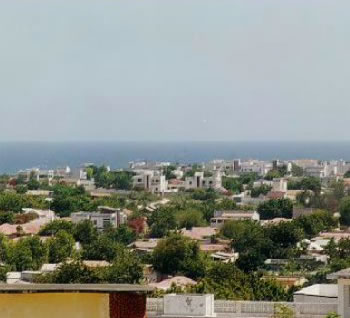
I first went to Kismayo in August of 2004 as part of an assessment team for the organization I work for (Mercy-USA) which has a TB program as well as a Mother Child Health Center (MCH) in Jilib, 120km north of Kismayo. I thought that the Juba region as a whole is the most beautiful region in Somalia. It was a breathtaking experience and I said to myself only if the area was safe from the constant attacks of the warring factions.
I even spotted a place in an island near Kismayo which I believe I will one day call my own. The amazing thing about the Juba region is that it has all the natural beauties you would wish for including; the pretty beaches of the Indian Ocean, a vast agricultural land that would suffice the entire Somali race, (if we use our heads) the famous Juba River meets the Indian Ocean there and that my friends is the spot you want to see, I mean, simply put, it’s mind-blowing.
One of the things that surprised me about that region was the fact that it has these islands that stretch until the Kenyan border. I used to hear about Juula Jawaay Islands when I was a young boy growing up in Mogadishu but I didn’t know who lived there or if there were similar islands in the area. The communities that live in these islands seem that they have not been impacted by the civil war to a large extent. They are peaceful and they somehow maintained their distinct cultural characteristics. These communities are mainly Baajuuns and they gave the impression that they are very self sufficient in terms of their day to day lives. These are fishing communities who mainly rely on trading with other coastal communities along the coastal line that leads to Kenya.
And then, the locals in Kismayo reminded of the good people of Mogadishu. All of a sudden, I felt like I was in Xamar Cadey back in the day. I was eating fresh fish that was caught that same day for lunch, playing soccer at the beach with the boys in the afternoon, having a nice café late in the evening at a local hotel and just listening to the conversations of those sitting near me. You know how loud we could be at times and it doesn’t matter where we are! Just think of it as when a group of Somali men sit at a Tim Hortons café in Toronto or Ottawa and talk about politics, sports or the good all days.
One experience that will stay with me for a long time is perhaps when we (a good friend from Toronto and a friend of his, a Somali-Dutch and I) decided to go for a picnic one Friday morning to a nearby village by the Indian Ocean. It was about lunch time when we said to ourselves that we need to ask a nomad family to assist us with some milk. After all, it’s part of Somali culture that one should take care of his/her guests. Not only they hosted us in their Somali hut (aqal Somali) but they also fed us with fresh camel milk that was milked right in front of us. That to me was the true Somali guest hosting (marti soor) that I used to hear about. They didn’t ask us who we were or from what region of Somalia we were from. This incident repeated itself through out my trips in different parts of Somalia.
For those of you who are from the Juba region I guess you remember how you used to go to a farm and have whatever fruits you wanted; well, I am happy to report to you that practice still exists. We went to a mango farm near Jilib once and we were told that we could eat as many mangos as we wanted as long as we are not taking any with us outside of the farm.
Something else that I didn’t know was the fact that the Bantu tribes are big in number in that region. One morning, we were driving inside the farm land and we saw hundreds of Baantu Somalis going to work. Then I asked if any Somali “laba goodle or faradheer” lives there and the answer came from a man that accompanied us from Jilib who said “almost everyone in that area was Bantu”. This
particular area I am referring to is called Kamsuma. We then drove through several villages and I realized that I was hardly seeing anyone else besides the Bantu Somalis.
You might be thinking, how come I am not saying anything about the safety issues that have been reported by the media? How about the conflict between the different warring factions there? First of all, I am very grateful to Allah that I haven’t personally seen any problem while traveling there but I can also say that, unless there is some fighting going on at that particular time in the area you are in, generally speaking, it’s safe to travel. Of course, you will find road blocks (isbaaro) and vehicles passing through the main road that connects Kismayo to the rest of the country pay some fee. It’s mainly young men in their twenties that control these roadblocks and it’s not necessarily true that they belong to any particular political group.
Now, one thing we have to realize if we want to be part of the solution in the current Somali conflict is that; these young men have no jobs and most of them didn’t get the opportunity to go to school or meet someone who would show them a way out. Also, did you think about the fact that these young men actually grew up in the civil war period; they were only small children when the war broke and they simply don’t know any better?
This brings me to tell you about a group called Kanava Youth Center. Kanava (canal in Finish) was established in Mogadishu in 2002 by a group of young Somalis with support from a Somali association based in Finland. The main objective under which KYC was created is to assist the youth find alternative ways to getting involved into conflicts. Kanava offers training programs such as carpentry, electricity, literacy programs in English, Somali and Arabic as well as drop-in centers for the youth. Today, Kanava has centers in Mogadishu, Kismayo and Baidoa and they plan to expand to more cities/towns in the near future.
What impressed me about KYC was a program they set up for the youth who were at the verge of joining the warring factions or in some cases some who already have joined different warring groups. These youths were given the skills necessary to work for themselves. This particular program is sponsored by UNICEF and so far, it attracted more than 200 youths from the area.
Also, KYC organizes football tournaments in which the most important one is the one held on the 21st day of September which is the World Peace Day. I admired the work of KYC so much that I have volunteered to represent them in Kenya and assist them in soliciting funds from the UN and other international relief and development organizations based there.
For more information about KYC, please visit www.kanavasom.com or www.baidoa.com/kanava.html
How can I forget the hospitality of my brothers from Muslim Aid (Muslim Aid is a UK based relief and development organization) which I stayed at their guest-house. Muslim Aid has an office in Kismayo and Mogadishu and it’s engaged in several educational as well as health programs in southern Somalia.
For more information on Muslim Aid please visit: www.muslimaid.org
Once again, the work of KYC and Muslim Aid demonstrates that even though we hear a lot of negative stories about Somalia, the forces of good are still alive.
Fathi A. Mohamed
[email protected]
Fathi A. Mohamed is a Somali Canadian working in East Africa for a relief and development organization called Mercy-USA. Fathi travels extensively to different parts of Somalia and he is a regular contributor to HOL.




