
Sunday January 4, 2026
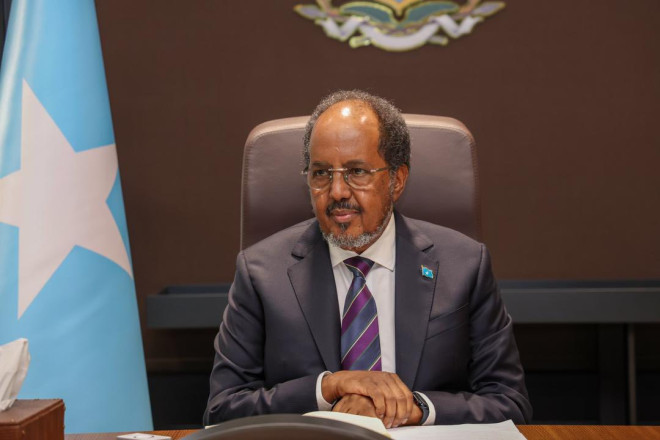
Mogadishu (HOL) — Somali President Hassan Sheikh Mohamud has condemned remarks attributed to U.S. President Donald Trump describing Somalis as “garbage,” calling the language unacceptable and dismissive of an entire people.
In an interview with Al Arabiya English broadcast Saturday, Mohamud said Somalis are “intelligent and capable people” and rejected what he described as demeaning rhetoric that reinforces harmful stereotypes about Somali communities, particularly those living abroad.
Trump’s comments, which have drawn criticism from Somali leaders and diaspora communities, came during a discussion about alleged large-scale fraud in Minnesota’s social assistance programs. Trump said he did not want Somalis in the United States and warned the country would “go the wrong way if we keep taking in garbage.”
Mohamud said millions of Somalis contribute positively to societies around the world, including in the United States, and stressed that broad generalizations based on isolated criminal cases are unjustified.
Addressing immigration, the Somali president said Somalis legally residing in the United States should be allowed to remain. Decisions regarding undocumented migrants, he said, fall under U.S. law and the authority of American institutions.
“We respect the sovereignty of other nations when it comes to immigration enforcement,” Mohamud said.
Somali communities in the United States are among the largest outside the Horn of Africa, with significant populations in Minnesota, Ohio and Washington state. In Minnesota, home to the country’s largest Somali-American community, leaders said Trump’s remarks have heightened fear and anxiety.
Trump’s comments followed questions about a high-profile fraud case involving a Minnesota-based nonprofit accused of falsely billing the state for meals for children during the COVID-19 pandemic. Dozens of people have been charged in the case, which federal prosecutors say involved millions of dollars in misused funds.
Somali officials and diaspora leaders say rhetoric targeting entire communities risks inflaming tensions at home and abroad, even as cooperation between Washington and Mogadishu remains critical in the fight against al-Shabab.