
Wednesday December 4, 2024
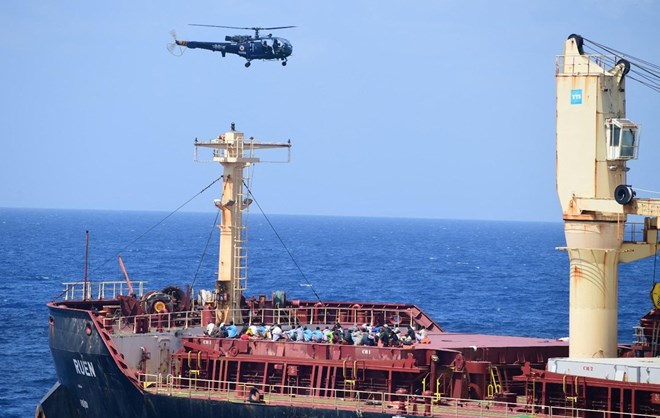
This picture shared by the Indian Navy on the X platform on March 16, 2024 shows people on board of the recaptured Maltese ship the MV Ruen, as an Indian Naval helicopter flies overhead. (PHOTO / INDIAN NAVY X VIA AFP)
Mogadishu (HOL) — Piracy off the Somali coast, once quelled by international naval patrols, is resurging as global maritime traffic shifts eastward due to Red Sea conflicts, according to a report by Skuld, a leading global marine insurance provider. With over 600 vessels now navigating these dangerous waters monthly—double last year’s traffic—the threat of hijackings and ransom demands has reignited fears of disruption to international trade.
Somalia’s coastline, once a byword for maritime piracy, is witnessing a disturbing return of criminal activity. Pirates, armed with renewed tactics and hijacked mother ships, are operating farther offshore, with attacks reported as far as 800 nautical miles into the Indian Ocean. The lucrative $5 million ransom recently paid for the Bangladeshi vessel Abdullah could embolden these groups, raising the stakes for global shipping.
While U.S.-led operations like Poseidon Archer and the EU’s Aspides focus on securing the Red Sea, analysts argue that this redistribution of resources has left Somali waters vulnerable to renewed piracy.
Somali pirates are no longer confined to local waters. Armed with hijacked dhows serving as floating bases, they launch attacks deeper into international waters, taking advantage of unguarded shipping lanes. According to the Maritime Security Centre – Horn of Africa (MSCHOA), these operations have become increasingly sophisticated, mirroring broader maritime security challenges.
Shipping companies are urged to adopt the latest Best Management Practices (BMP5), which recommend rerouting, deploying armed personnel, and rigorous crew training. Monitoring by organizations such as the UK Maritime Trade Operations (UKMTO) remains vital for vessels transiting high-risk zones.
However, experts caution that military responses alone will not solve the problem. The Institute for Security Studies emphasizes addressing root causes such as economic instability, illegal fishing, and Somalia’s weak governance. Without investment in local communities, piracy will remain an attractive path for many.