
by Guled Ahmed
Wednesday May 4, 2022
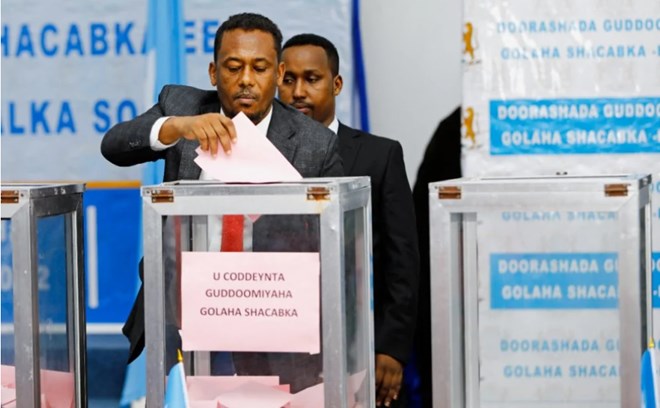
On Thursday, Somalia’s lower house elected former Minister of Commerce Adan Madobe as the new speaker. He won decisively with 64 percent of the vote from the 275 new members of the Lower House and was sworn in on April 14, 2022.
This comes after more than a year’s worth of attempts by the former President Mohamed Abdullahi Mohamed, also known as (Farmaajo), to delay the election process, including two failed coups. Though Madobe’s ascent to the presidency was a major milestone, it came at a high price as political violence displaced tens of thousands across various regions, most notably in the capital, Mogadishu. The lengthy process left outside partners such as the EU and the United States fatigue as they issued toothless sanctions and visa bans as punishment to Farmaajo. Now, after the swearing-in of the new parliament, Somalia is at a crossroads with the upcoming presidential election. The last mile of the election demands hands-on management from the United States and the EU to avoid the collapse of the Somali state.
The Root Cause
Safeguarding Somalia’s Last Mile
On April 18 the terrorist group al-Shabab claimed responsibility for shelling Somalia's parliament while it was working to set a date for the election of both house speakers and their deputies. This latest attack came one day after a member of the Federal Electoral Commission (FEIT) was attacked by a landmine blast. Similarly, on April 27, Somalia's police commander and the director of the National Intelligence Agency were accused of attempted assassination along with preventing the newly elected members of parliament from accessing the election venue.
Along with widespread fears regarding physical safety, there is also concern about a peaceful transfer of power. Since Farmaajo came to power, he has eroded two crucial pillars in Somalia’s state-building: security and a broad political consensus. In order to protect against political violence and election tampering, the United States and the EU should impose severe sanctions on Farmaajo and his allies. For example, freezing Farmaajo’s assets (and the assets of his allies), revoking his EU and U.S. citizenship, and imposing visa restrictions are vital first steps. It goes without saying that it is crucial to have a secure environment where parliamentarians are able to vote without fear. To secure the election process, the United States and EU must help move election committees, presidential candidates, and parliament members to secure areas—such as Halane, where Somalia’s international partners are currently staying—until a new president is elected. The United States and EU can also assist Prime Minister Mohamed Hussein Roble by providing additional security measures, such as incorporating Somali, U.S., and British special forces into election security.
For Somalia, a post-civil war country where there is strong precedence of political violence and destruction, it is critical to secure the political process to ensure that Somalia avoids a repeat of past failures.
Guled Ahmed is a Non-Resident Scholar at the Middle East Institute.