
Blog Post by Michelle Gavin
Thursday July 21, 2022
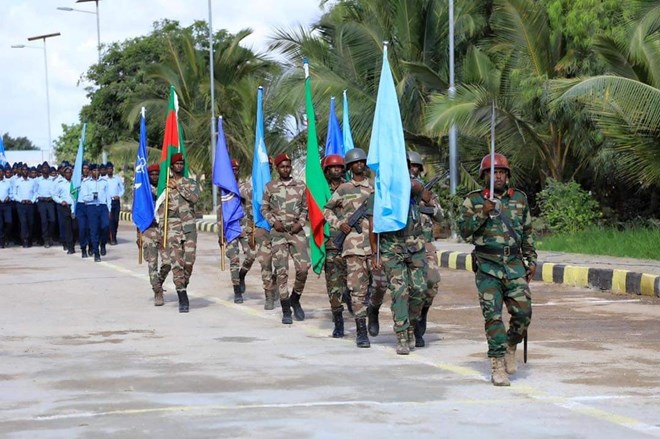
Earlier this month, Somalia’s President Hassan Sheikh Mohamud, who assumed office in May after a drawn-out and contentious electoral process, traveled to Eritrea. It makes sense for a new head of state (or in this case, returning leader–Mohamud held the same office from 2012–2017) to shore up regional relationships, especially in a state as fragile as Somalia. Since his election, Mohamud has also been to the United Arab Emirates, Turkey, Kenya, and Djibouti. Reports indicate he plans to travel to Ethiopia shortly. But it was the visit to Asmara that had perhaps the most immediate domestic political implications, as the President of Somalia verified the status of Somali soldiers sent to Eritrea for training by his predecessor–and kept incommunicado from their families since 2018.
The saga of these Somali soldiers has been full of twists and turns. Last year, the UN Special Rapporteur on the situation of human rights in Eritrea issued a report indicating that some of the Somali recruits had been sent to Tigray to fight alongside Eritrean and Ethiopian federal forces. Former Somali security officials made similar allegations. Somali civilians alleged that their sons had been recruited under false pretenses, such as the promise of security jobs in Qatar, and that others were simply swept away in secrecy. At home, the anger and despair of these Somali parents became a damaging political issue for the former Somali administration.
In the same vein, the Eritrean incursion into Ethiopia to settle old scores with Tigrayan forces, once welcomed by Ethiopian Prime Minister Abiy, offers Eritrea a level of access to the innermost circles of the Ethiopian security establishment that Abiy couldn’t unwind if he tried. The tripartite agreement among Ethiopia, Somalia, and Eritrea forged in 2018 has one clear winner: Eritrea, one of the most repressive and militarized states in the world. As the United States and other actors pursue policies aimed at resolving conflict in the region, there is no escaping the fact that containing Eritrea’s regional ambitions is as difficult as it is important.