
Wednesday, November 02, 2016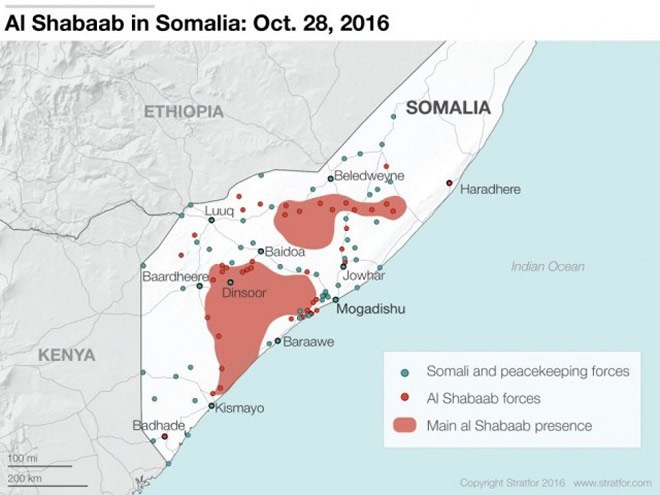
Al Shabaab, the militant Islamist group in Somalia, has taken over more territory over the past few weeks. With African Union and Somali troops stretched thin, the group has been able to steadily add to its holdings. But there is only so much al Shabaab can do to extend its reach. The group may have little choice but to dig in and wait, hoping that Mogadishu's foreign partners lose interest in the conflict before the army becomes strong enough to stand on its own.
Yet these offensives never fully destroyed al Shabaab, nor did they rob it of all its territory. In fact, the group continued to control a significant portion of the country along the eastern banks of the Jubba River. The group was still able to gather enough manpower and revenue to survive. Meanwhile, AMISOM, Ethiopian and Somali troops' ability to hold and rebuild reclaimed towns and cities remained limited. When Ethiopian and Kenyan forces tried to recapture Baardheere from al Shabaab in mid-2015, for example, al Shabaab quickly overran the areas troops temporarily took control of as they moved toward the city.
From these toeholds, al Shabaab has spread back into parts of the country that had previously fallen to AMISOM troops. (The most notable of these areas is the coastal region that lies just south of Mogadishu.) AMISOM forces often end up abandoning isolated rural outposts that are not worth the effort needed to defend them. But by leaving them to the militant group, African troops give al Shabaab the space to target other bases and acquire resources, revenue and recruits from villages close by. Though unable to hold them for long, al Shabaab continues to be active in the area near the country's capital and has demonstrated its ability to launch attacks in the vicinity of Mogadishu, where large concentrations of security forces are stationed.