Ethiopian troops are hurting extremists in Somalia but stability is still far away

Friday, January 06, 2012
Many independent Somalia-watchers think this could once again end in tears. Somalis and Ethiopians have been fighting each other on and off for centuries, with Somali zealots, inspired by Islam, periodically launching raids on predominantly Christian Ethiopia—or so the Ethiopians have long complained. Many Somalis resent Ethiopia’s sovereignty over the ethnic-Somali region of Ogaden. An attack on it in 1977 by Somalia ended disastrously; an Ethiopian counter-offensive backed by Cuban troops wrecked Somalia’s army and led to the collapse in 1991 of the last Somali regime to control the whole country. It was 15 years later that Ethiopia invaded Somalia with American support to unseat an Islamist government in Mogadishu, the seaside capital that has long been a wreck.
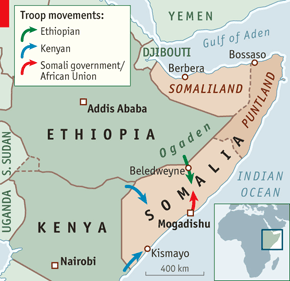 |
For the first time in years the Shabab is on the defensive outside Mogadishu, most of which it has lost in the past six months. Kenyan and Ethiopian forces, with some fumbling, are slowly but methodically going after them. Thousands of Shabab fighters, many of them boys, are marching long distances through the bush to get away. Their artillery pieces are useless and they feel insecure even in their old strongholds. The Somali people, less afraid of reprisals, are turning hostile. In Beledweyne locals mingle with Ethiopians in cafés, suggesting they believe the Shabab will not be back.
Somalia may now have its best chance of peace and security since 1991. If the government can consolidate its hold on Mogadishu, it will be a big step forward. The capital’s port is busy, its markets bustling. More suicide-bombings and assassinations will occur; a respected local journalist was killed last month. But this year most residents will, with luck, seek to remake their livelihoods rather than worry about fending off jihad.
Yet as anarchy recedes, old territorial questions will re-emerge. Somaliland, in the north, wants independence. Puntland, in the north-east, wants a lot of autonomy. Ethiopia is all for such goals. Mr Meles has good relations with these autonomous parts, hoping to divide and rule. He would like a corridor through Somaliland to export gas and likes using the port of Berbera.
But Ethiopia itself is a brittle political construct. A local court last month sentenced two Swedish journalists to 11 years in jail for crossing without permission from Somalia into the Ogaden. Mr Meles has had to subdue separatists from the Ogaden National Liberation Front. The Oromo people in southern Ethiopia occasionally display separatist tendencies. The Shabab is far from the only threat to stability in the Horn of Africa.