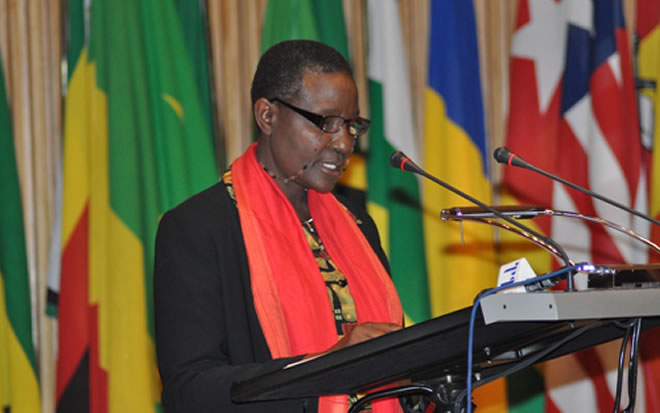
Mrs. Vera Brenda Ngosi, Director of Human Resource, Science and Technology
“When around the world, private universities are commended for their achievements and excellence, Africa is lagging behind. Whether the universities are public or private, no African university figures in the top 200 world university rankings”. It is with this concern in mind that the speakers addressed the audience at the conference.
In her opening remarks, Mrs. Vera Brenda Ngosi, Director of Human Resource, Science and Technology (AUC) underlined the need for universities to be “appropriately registered and accredited”. The emergence of private universities in Africa has to be subjected to regulations. And there is a need to avoid multiplication of “briefcase” universities delivering degrees with no real value though being costly. She said the continent has to have a system of evaluation and monitoring of universities, public and private, so that the students of the continent receive a quality education.
The Ethiopian Minister of Education, Ato Demeke Mekonnen emphasized that engaging in dialogue with the private sector no longer is a choice but rather a necessity, as figures show that nearly 30% of universities worldwide are private, in some countries,this percentage can be as elevated as 60%. He said the majority of the resources of such institutions come from the student tuition fees. However, this cost is unaffordable for some thus restraining access to education. Meanwhile, African governments only spend approx. 0.8% of their GDP and 20% of public expenditure on higher education.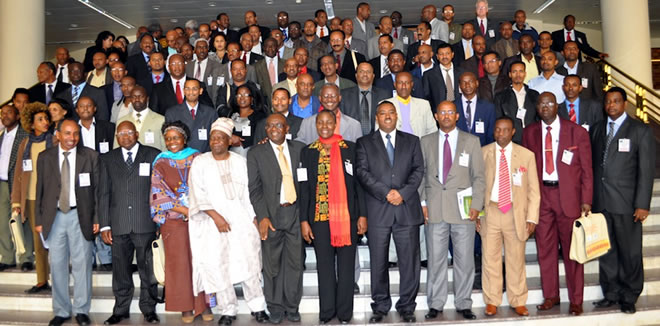
sharing, networking and resource mobilization as to fully integrate the private sector in the efforts countries are making in the education sector.
According to Prof. Olugbemiro Jegede, Former Secretary General of the Association of African Universities said that Africa needs to integrate itself in the global economy and education is the foundation to do so, adding Institutions need to be able receive more students. Another challenge the continent is currently facing is the lack of teachers. Nearly 2.5 million teachers are needed for primary, secondary and tertiary education. Apart from that, issues like gender inequalities, obsolete curricula, dilapidated infrastructure and dwindling funding are all threats to boosting higher education on the continent.
This Conference is the 10th in the series of consultative annual conference on private higher education provision organized by St. Mary’s University College (SMUC) to promote dialogue and better understanding of their roles in the society. This year, SMUC is partnering with the Association of African Universities (AAU), which is the apex higher education body in Africa, to broaden the scope and theme beyond the Ethiopian experience, as had been in the past.
The Conference was attended by vice- chancellors, rectors, presidents, and principals of public and private higher education institutions, as well as researchers, scholars; policy makers, development partners and other stakeholders from various African countries.