
Hassan Isilow
Friday, December 26, 2008
The children are no longer innocent or even fearful of anything.
These children have witnessed a lot of atrocities committed by their parents, relatives, neighbours and friends by either rebels or the government forces.
These once innocent children today live with a lot of pain and trauma after being hurt by wars in their home countries. They have been exposed to heart breaks, making some of the children turn to violence, since they no longer fear any one or anything that comes their way.
Some of these children are from Somalia, the Democratic republic of Congo and Southern Sudan. Some of them were child soldiers; others saw their parents being butchered.
Anthony Mbera aged 10, from the DRC, recounts that it was during a family outing that their village was struck by Congolese government forces killing his father, raping his mother and sister.
“We had left our Town home in Kanyabayonga in Eastern DRC, when Soldiers of the Congolese government, struck killing my father, brother and raped my mother and sister” recalls the teary Mbera.
Mbera says since then, he has never seen any of his relatives. He is currently being taken care off by a Congolese family living at the camp. “I don’t know if my mother is still alive or not,” he says.
Mohammed Hussien from Somalia has suffered trauma. The 15-year old boy from Mogadishu who has been in Uganda for only six months now vividly recalls how his father was murdered by Somali insurgents.
“I remember we had just returned from Friday prayers and were having lunch, when insurgents struck our home in Madina, Mogadishu. They demanded for money but my father had nothing so they killed him before looting our property,” he recalls.
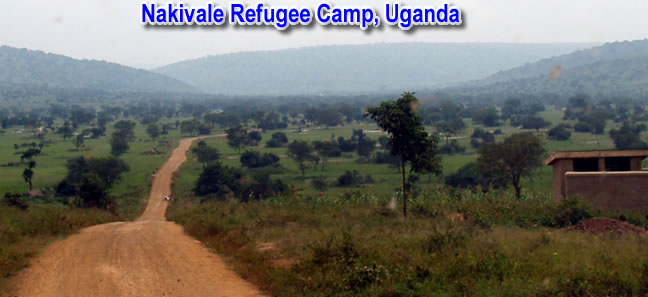
Mohammed is lucky to be attending school at Kasijwa Primary school a few kilometres from Nakivale refugee settlement camp. Most of his friends don’t go to school, because they can’t afford to buy uniforms or stationary. Despite the distance to Kasijwa Primary School, the boy braves the distance to attend school.
He lives with his widowed mother and six siblings. His mother, who prefers to remain anonymous, says she depends on the World Food Programm for survival.
“Where would we be today without the United Nations High Commission for Refugees, the Ugandan government and the World food programm,” she wonders.
The World Food Programme gives refugee households 7.2 Kilogrammes of maize and half a litre of cooking oil per house hold per person. Initially they used to be given 12.2 kilogrammes of maize and a litre of oil, but due to the current food crisis the world body has cut on its ratios, greatly impacting on refugees who depend on them for survival.
Refugees at Nakivale say they are grateful to the Ugandan government for having offered them asylum but have a few problems they want the government and the UNHCR to address. “We are happy that they have saved our lives by giving us asylum, food and medicine, but our priority is more than this.
We need bigger resettlement packages or employment so as to sustain our families” said a refugee who preferred to remain anonymous.
The source said their most pressing problem is lack of a secondary school at the camp to cater for the overwhelming number of children who complete primary school.
Source: Monitor Online, Dec 25, 2008