
By Hassan Yare
Wednesday, January 31, 2007
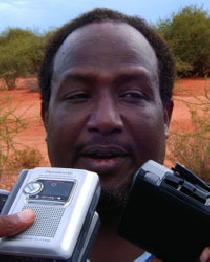 BAIDOA, Somalia (Reuters) - Somalia's parliament elected a new speaker on Wednesday to replace one ousted over his overtures to Islamist rivals defeated by government and Ethiopian troops during a two-week war in December.
Members of parliament voted overwhelmingly in favour of Sheikh Adan Madobe who takes over from Sharif Hassan Sheikh Adan, voted out of office on January 17.
Adan's sacking drew international criticism that President Abdullahi Yusuf's government was missing a crucial post-war opportunity to become more inclusive.
"Sheikh Adan Madobe has received 154 votes, thereby becoming the new speaker of parliament," Deputy Speaker Osman Elmi Boqore told parliament, adding that runner-up Ibrahim Adan Hassan won 54 votes.
Parliament sources said Madobe enjoys support from Yusuf, who arrived in Baidoa on Tuesday evening.
The government, backed by troops and weapons from Ethiopia, drove out the Islamists who had controlled the capital Mogadishu and much of the south for six months.
Former speaker Adan had close ties with Mogadishu businessmen who financed the Somalia Islamic Courts Council. He tried several times to strike peace deals between the government and the Islamists -- moves that infuriated the government.
Runner-up Hassan accepted defeat.
"I have accepted the result and I will work with the new speaker of parliament," he told the house before embracing Madobe amid applause from MPs.
Madobe said in a brief address to parliament: "I wish to congratulate the members of parliament who voted for me, including those who did not vote for me. I promise to be fair and just to all."
AFRICAN UNION FORCES
As Somalia's transitional government tries to cement political control of the country, African leaders are struggling to build an African Union peacekeeping force for Somalia, which would fill a security vacuum after Ethiopian troops leave.
Ethiopia says its mission is complete and it wants the first AU units to deploy by mid-February. But an AU summit ended on Wednesday in Addis Ababa with a proposed peacekeeping force for Somalia still lacking firm commitments for thousands of troops.
In Mogadishu, reaction to the plan was mixed.
"We badly need the troops. This is a big failure by the African Union. ... We need good leaders in the AU. Once again Africans have failed to solve their own problems," said businessman Abdullahi Sheikh.
But peace activist Abdullahi Mohamed Shirwa disagreed.
"I feel there is no need for the foreign troops, we need reconciliation and consensus building among Somalis," he said.
"The government needs to heal the nation. This is not the right time for a military intervention," he added.
Many African nations are nervous about committing soldiers to one of the world's most dangerous countries where warlords and their gunmen ruled unchecked for 15 years.
The dangers were underlined on Tuesday when a series of blasts rocked northern Mogadishu in an area of the capital where Ethiopian troops are based, security sources and residents said.
Uganda, Nigeria and Burundi have pledged most of the troops so far, with an unknown number also committed by Ghana and Malawi. Zambia is considering a contribution.
A senior Algerian official said his country would provide about 12 transport planes to airlift the troops.
The European Union has released 15 million euros to finance the Somalia peacekeepers.
Speaking in Baidoa, Prime Minister Gedi called on Tuesday for a state of emergency law recently passed by parliament to be implemented, citing the presence of technicals -- pick-up trucks mounted with heavy arms that are Somalia's version of tanks.
"In the next coming hours armed technicals and small arms that do not belong to the government will not be allowed to roam freely," he told parliament.
Source: Reuters, Jan 31, 2007